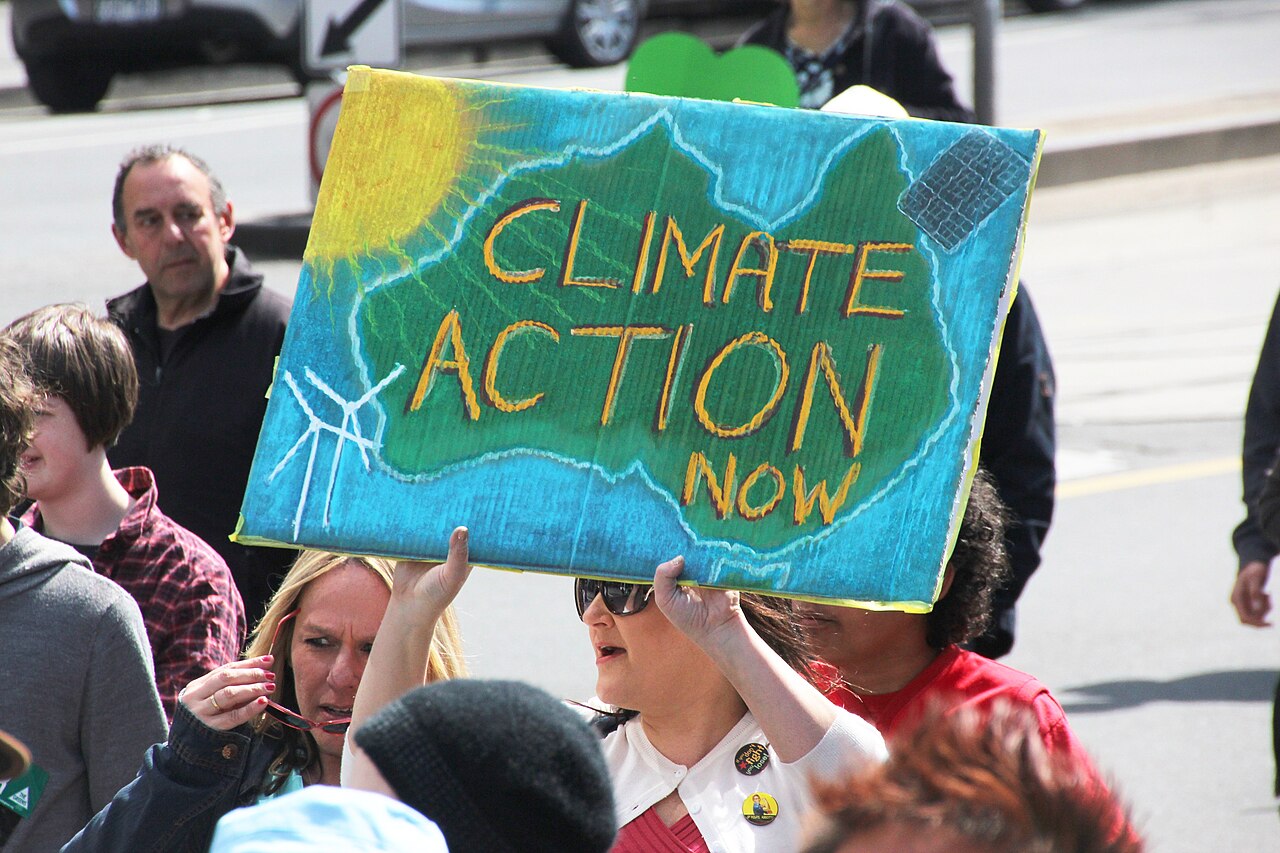
Photo above: John Englart, licensed under Creative Commons Attribution-Share Alike 2.0
COP31, the 31st UN climate conference, is underway in Antalya, Türkiye. Australia’s Climate Change and Energy Minister, Chris Bowen, is serving as President of Negotiations – the first time Australia has chaired the formal negotiations of a UN climate conference. Bowen says that in a rapidly changing climate, “strengthening adaptation and resilience” is a priority.
But how does Australia’s response to risk at home – and how it weighs that against other priorities – really stack up?
Australia’s climate risks are growing. The Commonwealth’s 2025 National Adaptation Plan, recognises that climate impacts are already affecting Australia, causing widespread, accumulating harm and creating systemic risks across health, food, water, infrastructure and ecosystems. The National Adaptation Plan recognises that the impacts will increase over time – even with strong global action to reduce emissions.
Despite the current and growing risks from climate change, the Australian government continues to give greater strategic priority to military threats than to the everyday systems people rely on to adapt and respond to a changing climate.
Australia’s 2026–27 budget commits around $181.9 million a day on defence, while the 2026 National Defence Strategy provides for an additional $53 billion in defence investment over the next decade.
Meanwhile, the Australian Sustainable Finance Institute (ASFI), in a 2026 report, argues that investment in adaptation and resilience remains inadequate. The Insurance Council of Australia agrees, saying in 2026 that investment in adaptation infrastructure that would reduce future losses is not keeping pace with the growing risk.
By ASFI’s estimates, disasters currently cost the Australian economy around $38 billion a year and could rise to at least $73 billion by 2060 under current trajectories. That’s just the economic toll: all the essential systems that sustain our life are expected to be affected.
And while no-one is immune from the direct and indirect effects of climate change, these effects aren’t spread equally: older people, children, pregnant women, people in remote communities, and First Nations people are recognised to be at greater risk from the effects of climate disaster.
Australia is already locked into significant climate impacts, and far greater harms can still be prevented. Yet the government’s largest long-term investment commitment and whole-of-government strategic priority is not rapid decarbonisation and adaptation – but the AUKUS nuclear-powered submarine program.
The Australian government has a long-term investment program for AUKUS, with defined capabilities, industrial objectives and funding commitments extending over decades.
By contrast, responsibility for climate adaptation remains distributed across portfolios and levels of government – along with businesses, households and community organisations. And there’s no costed, long-term Commonwealth investment program allocating resources against the identified priority risks.
WILPF’s Move the Money campaign calls for climate adaptation and resilience to be treated as core national priorities.
Our call is a response to the real and growing risks from climate change, and also to the narrowing of common understanding of what security is, and how we build it.
Our feminist understanding of security asks whether public policy protects the foundations of everyday life, enables people to live with dignity, and addresses inequalities. This kind of human security can’t be built – and isn’t protected – by nuclear subs or any other military capabilities a nation acquires, but by people and communities who have the resources to withstand the threats they face.
We’re asking the Australia Government to move the money from militarised approaches to security, and to fund climate action at the level of climate risk.
Learn more about Move the Money.